

Somewhere on the wild, sea-lashed western coast of Argyll, tucked behind a forestry village most people have never heard of, stands a castle that has been quietly watching the tides of Scottish history for nearly a thousand years. No crowds. No gift shop queue. No visitor buses rumbling up a grand driveway. Just ancient stone walls rising from a low, rocky ridge above a glittering sea loch — and a silence so deep you can almost hear the footsteps of the chieftains who built this place.


This is Castle Sween. And if you haven’t heard of it yet, you are in for a treat — because this is the oldest standing castle on the Scottish mainland that we can date with any certainty.
A Castle Older Than Scotland’s Own Borders
🏴 Your Scottish clan has a story — trace it back.
Discover where your Scottish ancestors came from — their clan, their county, their emigrant journey. Our free step-by-step guide covers Scottish ancestry records, clan histories, DNA tools, and the GRO Scotland archive. Join 42,000+ readers staying connected to Scotland.
Claim Your Free Scottish Ancestry Guide →Let that sink in for a moment. When Castle Sween was built, in the 1100s, Argyll wasn’t even part of the Kingdom of Scotland. It lay in a contested, wind-battered realm between Norse power and Gaelic chieftaincy — a frontier land where the sea was the highway and loyalty was measured in galleys rather than armies.
Historic Environment Scotland confirms that the architectural details leave no doubt: broad buttresses on the outer walls and a striking absence of windows or openings — beyond the entrances — are the telltale fingerprints of 12th-century construction. These weren’t aesthetic choices. They were survival instincts set in stone.
The Man Behind the Name: Suibhne ‘the Red’
The castle — and the beautiful sea loch it overlooks — both take their name from Suibhne (pronounced ‘Sven’) ‘the Red’, a chieftain of Irish descent and the founding ancestor of the MacSween clan. He was the son of Hugh Anrahan, whose family connections stretched to the royal courts of Ulster and the High Kingship of Ireland. This was no minor local laird. This was a man of extraordinary lineage carving out his legacy on a wild Scottish shore.
Suibhne built his castle on a low, rocky ridge overlooking the loch, and the position was no accident. From here, he could command the entrance to the narrow sea loch and control the movement of vessels along one of the most strategically important waterways on the west coast. Even a small islet to the west of the castle was cleared and prepared as a boat landing — a reminder that in this part of the world, power came not from roads, but from the sea.
500 Years of Occupation, War and Power
Castle Sween wasn’t just built and forgotten. It was lived in, fought over, added to and altered for five centuries. Its curtain wall — a formidable 2 metres thick and 8 metres high — surrounded a quadrangular courtyard, and over the generations new towers and structures were raised within it.
By the 1200s, control of Argyll and the Isles was being fiercely disputed between the King of Norway and the King of Scots. The MacSweens, caught in the middle of this geopolitical tug-of-war, lost their grip on Knapdale by 1262 when the Stewart Earls of Menteith replaced them as Lords of the region.
In around 1300, John MacSween made a dramatic bid to reclaim his family’s ancestral stronghold — raising ‘a fleet against Caisteal Suibhne’ in what must have been an extraordinary maritime assault on the castle. He failed. Around the same time, a new three-storey seaward tower was added to the complex, reinforcing the castle’s defensive capabilities.
By the late 1300s, Castle Sween had passed to the MacDonald Lords of the Isles — the most powerful Gaelic dynasty in medieval Scotland. Several families served as keepers in their name, including the MacNeills and later the MacMillans. A remarkable artefact discovered during excavations — a 15th-century harp-peg — hints at the cultured, music-loving world that flourished within these walls under the MacDonald era.
In 1481, King James III, increasingly suspicious of MacDonald treachery, transferred the castle to the powerful Campbell Earls of Argyll. Then, in 1647, during the brutal Wars of the Three Kingdoms, Castle Sween met its end. Alasdair MacColla and his Irish Confederate forces attacked and burned the castle, leaving the roofless ruins we see today.
Ancient History Beneath the Castle Walls
Castle Sween has been excavated several times, and every dig reveals that human occupation here goes back far beyond the medieval walls above. Excavations in the 1920s uncovered a stone axe and whetstone in a cave beneath the castle, and a later dig in the 1980s found evidence of at least five separate periods of use within the courtyard — layer upon layer of human lives, stretching back into prehistory.
Even a Neolithic six-knobbed stone ball has been recovered from the site. People have been drawn to this particular curve of shoreline for thousands of years. The stone walls of the 1100s were simply the latest chapter in a very, very long story.
Finding Castle Sween Today
Castle Sween sits on the eastern shore of Loch Sween, in Knapdale, south of the small forestry village of Achnamara on the B8025, on the west coast of Argyll. It’s not exactly on the main tourist trail — and that’s precisely what makes it so wonderful.
Visitors access the castle on foot, walking downhill through an adjacent holiday park for roughly 25 minutes to reach the ruins. The views across Loch Sween towards the islands of Jura and Islay are nothing short of spectacular. People who make the effort consistently describe the experience as extraordinary — the kind of place that makes you feel connected to something vast and ancient.
Today, Castle Sween is protected and maintained by Historic Environment Scotland, though the organisation has flagged that the site faces very high risk from coastal erosion due to climate change — a sobering reminder that even stone walls nine centuries old are not invincible.
“Castle Sween has been watching the tides of Scottish history for nearly a thousand years — and it’s still worth the journey.”
Have you visited Castle Sween? We’d love to hear about your experience in the comments! If Knapdale is on your Scotland wish list, share this post with a fellow castle lover — the hidden gems deserve a little more spotlight.

What is the oldest castle in Scotland?
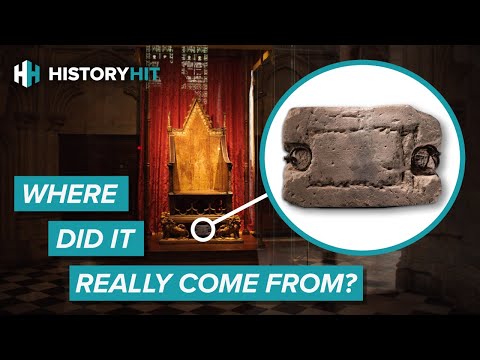
What is the Stone of Destiny in Edinburgh?
The Stone of Destiny is an ancient symbol of Scotland’s monarchy, used for centuries in the inauguration of its kings. Seen as a sacred object, its earliest origins are now unknown. In 1296, King Edward I of England seized the stone from the Scots, and had it built into a new throne at Westminster.
Collect your gift!
Go deeper into Scotland
Explore our Scotland planning guides to turn your curiosity into your next adventure. Or join 43,000+ readers who get a daily Scotland story delivered free.
Get Your Free Digital Copy Of The Ultimate Scotland Travel Guide


Around The Web
More rain and flooding lash Scotland as Met Office issue warnings across country
Scotland travel: Edinburgh opening planned for hotel chain
Marriott Opens W Hotel in Edinburgh, Scotland
6 Best Castle Hotels in Scotland
Discover what Edinburgh has to offer this festive season
Spectacular Hobbit pod village set to be built less than an hour from Edinburgh
New trains launch for passengers on Glasgow Subway
6 of the best places in and around Glasgow to buy a real Christmas tree
6 Best Castle Hotels in Scotland
Scotland’s best winter walks with ‘eye popping’ views that end at a cosy pub
Edinburgh woman sells first edition Harry Potter book for whopping £55,000
Have You Seen A Perfect 12 Women’s Caber Toss?


From Social Media
What is the flower of Scotland?


Scottish Food You Will Love
Scotch Pies – How to make the traditional Scottish Pie – The KING of Pies!

Coo Wee
Scottish accent vs Irish accent


Thank you for reading Love Scotland— your support allows us to keep doing this work.
If you enjoy Love Scotland, it would mean the world to us if you invited friends to subscribe and read with us. If you refer friends, you will receive benefits that give you special access to Love Scotland
Our Daily Newsletter is free and will remain free for our loyal followers forever.. (if you are not subscribed then just enter your email below) But as they say in the infomercials, that’s not all.. For less than the price of a wee dram, you can upgrade to our premium Newsletter which will give you access to our archive of travel deep dives, travel itineraries as well as special deals curated for our premium subscribers. So consider buying us a drink and upgrade to get all the goodies….

Essentials you need to pack for your Scotland Trip


Ready to experience this yourself?
43,000 Scotland lovers can’t be wrong.
Every week, our free newsletter delivers hidden Highland gems, seasonal travel guides, local stories, and practical tips — straight to your inbox. Join the community that loves Scotland as much as you do.
FREE GUIDE: 25 Hidden Gems of Scotland That Most Tourists Never Find (PDF)
Download our free Scotland Travel Guide (PDF)
Love Scotland?
Get the best of Scotland delivered to your inbox every week — free.
Join 43,000+ readers. No spam, unsubscribe anytime.
🏴️ Join 43,000+ Scotland Lovers
Every weekday morning, get Scotland’s hidden castles, whisky secrets, and Highland travel inspiration — the kind you won’t find in any guidebook.
Love more? Join 65,000 Ireland lovers → · Join 30,000 Italy lovers → · Join 7,000 France lovers →
Free forever · Fresh stories, Mon–Fri · Unsubscribe anytime