

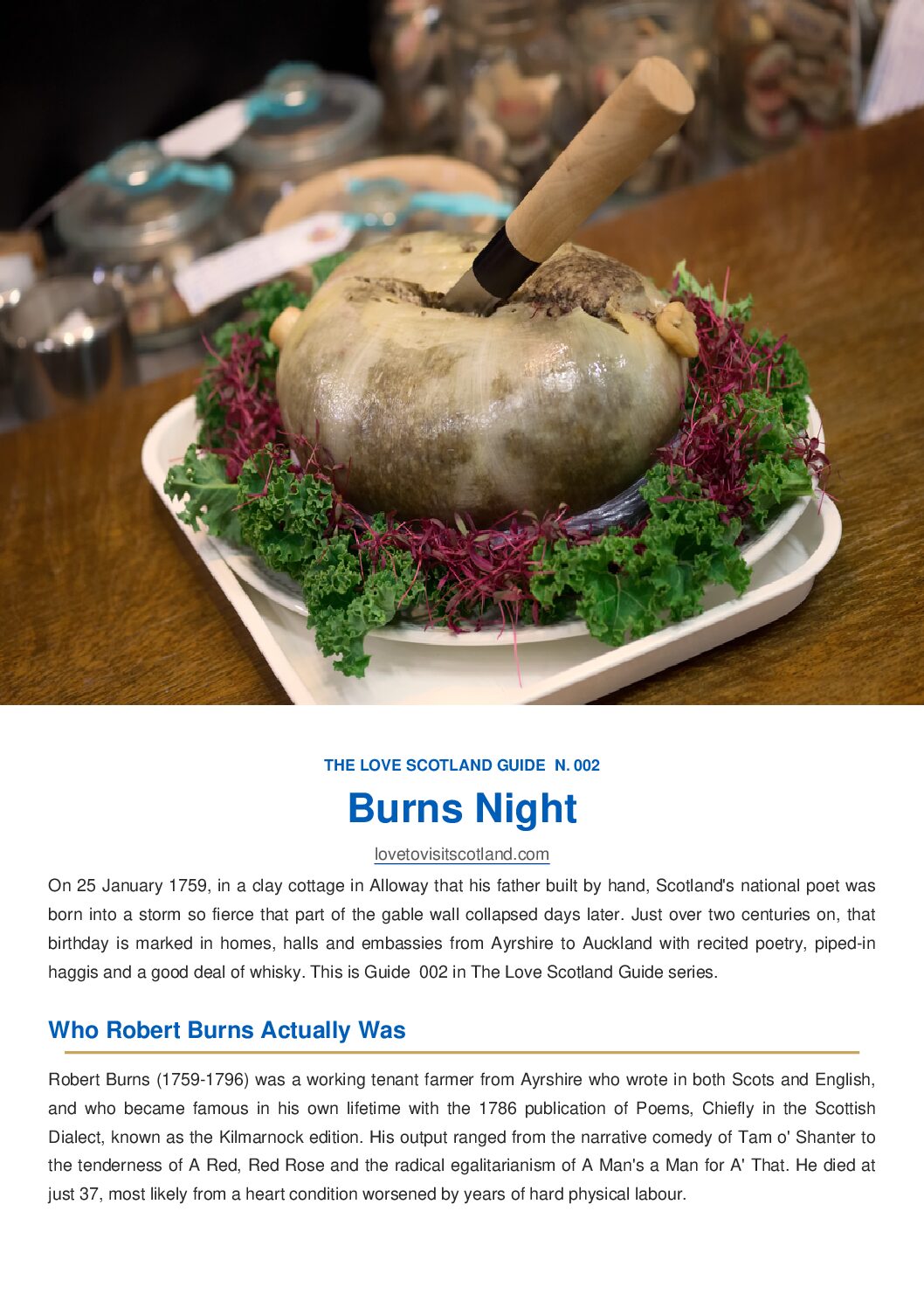
Haggis, neeps and tatties is Scotland’s most iconic plate of food — three humble ingredients that together define Burns Night and stand for everything hearty, honest, and distinctly Scottish. The neeps and tatties recipe on its own is one of the simplest things you can make in a Scottish kitchen. Mashed swede (neeps) and mashed potato (tatties), served alongside haggis on Burns Night or with a Sunday roast, need only butter, salt, and a little patience. If you have never made the classic Burns Night supper from scratch, this guide walks you through every step.

What Are Neeps and Tatties?
“Neeps” is the Scottish word for swede — the large, purple-skinned root vegetable known in England as a swede and in North America as a rutabaga. “Tatties” is the Scottish word for potatoes. Together, mashed neeps and mashed tatties form the traditional accompaniment to haggis, Scotland’s national dish, particularly on Burns Night, celebrated every 25th January.
It is worth clarifying: in Scotland, “neep” refers to swede. In some parts of England and Ireland, “turnip” is used for the same vegetable. Elsewhere, “turnip” means the smaller, white-fleshed, purple-topped root. This causes no end of confusion. For this recipe, you want the large, waxy, orange-fleshed swede — not the small white turnip.
The History of Neeps and Tatties in Scotland
Potatoes arrived in Scotland in the late 16th century, brought back from the Americas. By the 18th century, they had become a staple crop across the Highlands and Lowlands alike. Swede arrived slightly later, in the late 18th century, and quickly spread across Scottish farms as a reliable, hardy winter crop.
Robert Burns did not invent the combination, but his 1787 poem To a Haggis — with its famous lines addressing the “great chieftain o’ the puddin’ race” — cemented the trio of haggis, neeps, and tatties as Scotland’s most celebrated meal. When the first formal Burns Supper was held in 1801 by Burns’s friends at the Globe Inn in Ayr, neeps and tatties were on the table. They have stayed there ever since.
The pairing makes practical sense. Both swede and potato survive winter storage well. Both are grown widely across Scotland. Both complement the rich, peppery, offal-based haggis without overpowering it. Together, they form a balanced, warming plate — exactly what Scotland’s climate demands.
Neeps and Tatties Recipe: Ingredients (Serves 4)
You do not need much to make a proper plate of neeps and tatties. Keep it simple.
For the Neeps (Mashed Swede)
- 1 large swede (approximately 800g–1kg)
- 30g unsalted butter
- Salt and white pepper, to taste
- A pinch of freshly grated nutmeg (optional but traditional)
For the Tatties (Mashed Potatoes)
- 1kg floury potatoes (such as Maris Piper, King Edward, or Rooster)
- 50g unsalted butter
- 4–5 tablespoons warm whole milk
- Salt and white pepper, to taste
Note: Neeps and tatties are always served separately — two distinct mounds on the plate. Do not mix them together (that would be Clapshot, which is its own dish from Orkney).
Enjoying this? 43,000 Scotland lovers get stories like this every week. Subscribe free →
How to Make Neeps and Tatties: Step-by-Step Method
Step 1: Prepare and Cook the Neeps
Peel the swede thickly — the skin and outer layer are tough and bitter. Cut it into rough chunks, about 3cm across. Place them in a large saucepan and cover with cold, well-salted water. Bring to the boil, then reduce the heat and simmer for 25–30 minutes, until the swede is completely tender when you pierce it with a knife. Drain well and return to the pan over low heat for a minute to drive off excess moisture. Swede holds a lot of water, and wet mash is watery mash.
Step 2: Prepare and Cook the Tatties
Peel the potatoes and cut them into evenly sized chunks — roughly 4cm. Even sizing matters here. It ensures they cook at the same rate. Place them in a separate large pan of cold, salted water. Bring to the boil, then simmer for 18–22 minutes until completely tender. Test with a sharp knife — it should slide in with no resistance. Drain thoroughly, then return to the pan over low heat for 1–2 minutes to steam off any remaining water.
Step 3: Mash the Neeps
Add the butter to the drained swede chunks. Mash vigorously until smooth and fluffy. Swede is denser than potato and takes more effort. Season generously with salt and white pepper. Add a small grating of nutmeg if you like — it lifts the flavour beautifully. Taste and adjust. Keep warm while you finish the tatties.
Step 4: Mash the Tatties
Add the butter to the drained potatoes. Mash until smooth, then gradually add the warm milk a tablespoon at a time, beating it in with a wooden spoon or potato masher. You want a creamy, light mash — not stiff, not sloppy. Season with salt and white pepper. Taste and adjust.
Do not use a food processor or electric blender for potato mash. Overworking potatoes releases too much starch and makes the mash gluey. A good old-fashioned potato masher does the job perfectly.
How to Serve Neeps and Tatties
Serve neeps and tatties hot, in two separate spoonfuls or mounds on a warmed plate. Traditionally, haggis sits at the centre of the plate with the neeps on one side and the tatties on the other. This is the classic Burns Night presentation.
Beyond Burns Night, neeps and tatties work brilliantly alongside a Scottish venison casserole, slow-roasted lamb, or a Sunday roast chicken. They are winter comfort food at its most straightforward.
Some Scottish households drizzle a little single malt whisky over the haggis before serving — a nod to Robbie Burns’s love of a dram. A Whisky Mac on the side makes Burns Night complete.
Tips for the Perfect Neeps and Tatties
Choose Floury Potatoes
Waxy potatoes (such as Charlotte or Jersey Royals) stay firm and are great for salads. They do not mash well. For tatties, choose a floury variety: Maris Piper, King Edward, or Rooster. These break down easily and produce light, fluffy mash.
Do Not Skimp on the Butter
Butter is what makes both neeps and tatties taste like Scotland rather than a school canteen. Be generous. Traditional Scottish recipes do not hold back on butter, and they are right not to.
Season at Every Stage
Salt the cooking water. Season the mash. Taste and adjust before serving. Underseasoned neeps taste flat and starchy. Well-seasoned neeps taste rich and earthy.
Serve Immediately
Both mashes hold heat well but are best served straight away. If you need to keep them warm for more than 10 minutes, cover the pans with a lid and keep them over the lowest possible heat, stirring occasionally.
What Is Clapshot? (The Orkney Version)
Clapshot is the Orkney Islands’ variation on the neeps and tatties theme. In clapshot, the swede and potato are mashed together into a single dish, often with the addition of a little chives or spring onion. The result is a pale golden mash with more complexity than either component alone.
Orkney is a cluster of islands off Scotland’s north coast, and clapshot is as emblematic of those islands as Orkney cheddar or Orkney ale. If you visit the islands, you will find it on nearly every traditional menu. For Burns Night on the mainland, the neeps and tatties remain separate. But Clapshot is well worth trying as a weeknight side dish in its own right.
If you enjoy exploring Scotland’s regional food traditions, our guide to Scottish food beyond haggis covers the full breadth of the country’s culinary heritage — from Arbroath smokies to Dundee cake.
More Traditional Scottish Recipes to Try
Once you have mastered neeps and tatties, Scotland’s other classic recipes are waiting. A bowl of Cullen Skink — smoked haddock chowder from the Moray coast — is the perfect Scottish starter. For dessert, Cranachan, made with toasted oats, raspberries, honey, and whisky cream, is unbeatable. And a plate of Cock-a-Leekie soup on a cold October evening will warm you through completely.
Frequently Asked Questions
What do Scottish people call turnip?
In Scotland, “neep” refers to swede (known in North America as rutabaga) — the large, orange-fleshed, purple-and-yellow-skinned root vegetable. The smaller, white-fleshed root is simply called “turnip” even in Scotland. When a Burns Night menu says “neeps,” it always means swede.
Can I make neeps and tatties ahead of time?
Yes. Both mashes can be made several hours in advance and reheated. Store them separately in covered saucepans or airtight containers in the refrigerator. To reheat, place the pan over low heat and stir gently, adding a splash of milk or small knob of butter to loosen. Reheat until piping hot all the way through.
Are neeps and tatties served mixed together or separately?
Traditionally, neeps and tatties are served as two separate mounds on the plate — one orange, one white or pale yellow. Mixing them together is a different dish called Clapshot, which comes from the Orkney Islands. On a formal Burns Night table, the two mashes should always remain separate.
What is the best potato for tatties?
Floury potato varieties work best for mashing. In Scotland, Maris Piper and King Edward are the most widely available and reliable choices. Both mash smoothly without becoming gluey. Rooster potatoes (common in Ireland and Scotland) are also excellent. Avoid waxy salad varieties such as Charlotte or Nicola — they do not break down properly.
Join 43,000+ Scotland Lovers
Every week, get Scotland’s hidden gems, local secrets, and travel inspiration — the kind you won’t find in any guidebook.
Subscribe free — enter your email:
Already subscribed? Download your free Scotland guide (PDF)
Love more? Join 64,000 Ireland lovers → · Join 30,000 Italy lovers → · Join 7,000 France lovers →
Free forever · Fresh stories, Mon–Fri · Unsubscribe anytime
Secure Your Dream Scottish Experience Before It’s Gone!
Planning a trip to Scotland? Don’t let sold-out tours or packed attractions dampen your adventure. Iconic experiences like exploring Edinburgh Castle, cruising along Loch Ness, or wandering through the mystical Isle of Skye often fill up fast—especially during peak travel seasons.

Booking in advance guarantees your place and ensures you can fully immerse yourself in the rich culture and breathtaking scenery without stress or disappointment. You’ll also free up time to explore Scotland's hidden gems and savour those authentic moments that make your trip truly special.
Make the most of your journey—start planning today and secure those must-do experiences before they’re gone!
***************************************************
DISCLAIMER Last updated May 29, 2023
WEBSITE DISCLAIMER
The information provided by Love to Visit LLC ('we', 'us', or 'our') on https:/loveotvisitscotland.com (the 'Site') is for general informational purposes only. All information on the Site is provided in good faith, however we make no representation or warranty of any kind, express or implied, regarding the accuracy, adequacy, validity, reliability, availability, or completeness of any information on the Site.
UNDER NO CIRCUMSTANCE SHALL WE HAVE ANY LIABILITY TO YOU FOR ANY LOSS OR DAMAGE OF ANY KIND INCURRED AS A RESULT OF THE USE OF THE SITE OR RELIANCE ON ANY INFORMATION PROVIDED ON THE SITE. YOUR USE OF THE SITE AND YOUR RELIANCE ON ANY INFORMATION ON THE SITE IS SOLELY AT YOUR OWN RISK.
EXTERNAL LINKS DISCLAIMER
The Site may contain (or you may be sent through the Site) links to other websites or content belonging to or originating from third parties or links to websites and features in banners or other advertising. Such external links are not investigated, monitored, or checked for accuracy, adequacy, validity, reliability, availability, or completeness by us.
WE DO NOT WARRANT, ENDORSE, GUARANTEE, OR ASSUME RESPONSIBILITY FOR THE ACCURACY OR RELIABILITY OF ANY INFORMATION OFFERED BY THIRD-PARTY WEBSITES LINKED THROUGH THE SITE OR ANY WEBSITE OR FEATURE LINKED IN ANY BANNER OR OTHER ADVERTISING. WE WILL NOT BE A PARTY TO OR IN ANY WAY BE RESPONSIBLE FOR MONITORING ANY TRANSACTION BETWEEN YOU AND THIRD-PARTY PROVIDERS OF PRODUCTS OR SERVICES.
AFFILIATES DISCLAIMER The Site may contain links to affiliate websites, and we receive an affiliate commission for any purchases made by you on the affiliate website using such links. Our affiliates include the following:
- Viator
We are a participant in the Amazon Services LLC Associates Program, an affiliate advertising program designed to provide a means for us to earn advertising fees by linking to Amazon.com and affiliated websites.


